
Misting Monsoon Diving logo

Coastal Angler Magazine · Tampa Bay Edition · October 2026

How fast do zincs burn? Our founder answers it in Coastal Angler.

It is the most common corrosion question on the dock. In the October Tampa Bay edition of Coastal Angler Magazine, Misting Monsoon Diving founder Jarrett Maryon answers it with electrochemistry instead of a calendar.
Coastal Angler Magazine “How Fast Do Zincs Burn?” · By Jarrett Maryon · Tampa Bay Edition · Published October 1, 2026

The short answer

Anode life is set by the load on it, not by the calendar.

“A zinc still bolted on is not proof of protection; the millivolt number is.”

Jarrett Maryon, Misting Monsoon Diving — Coastal Angler Magazine, October 1, 2026

A sacrificial anode is the most active metal in the galvanic cell your boat forms in seawater. It corrodes so the propeller, shaft, struts and rudder do not. How quickly it goes depends on salinity, water temperature, how much metal it protects, the condition of the bonding system, and stray current in the slip. That is why two boats in the same Tampa Bay marina can run very different anode lives and both be normal.

From the article

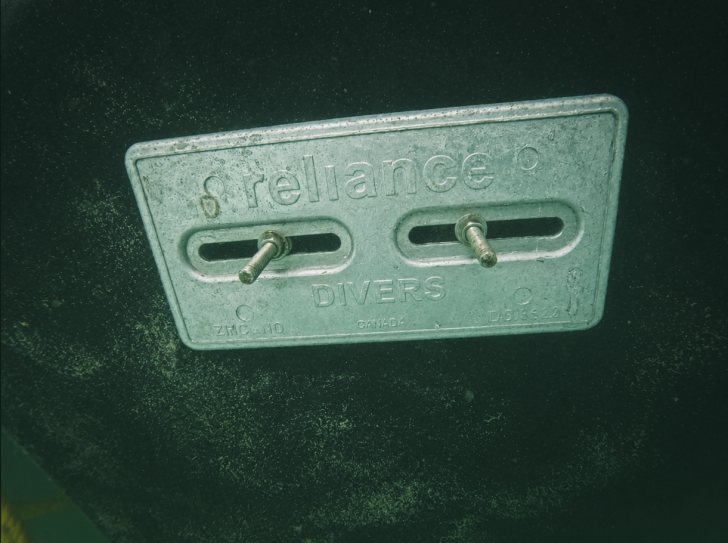
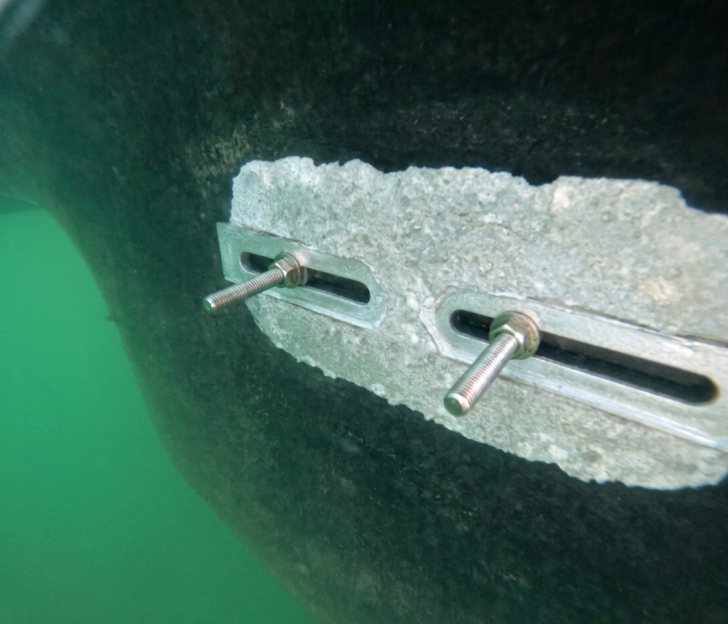
Fresh, and spent — photographed on the hull.

A fresh rectangular sacrificial anode bolted to a dark hull underwater, edges and lettering intact
Fresh anode
A heavily consumed sacrificial anode underwater, pitted and eroded down around its mounting studs
Consumed anode

Underwater photos published with the Coastal Angler article. Every Misting Monsoon dive is documented the same way — photo and video of what is actually on the hull.

Key points

What the article covers, in five points.

  1. Protection is a measured number.The American Boat & Yacht Council’s E-2 cathodic-protection standard calls for the anode to pull protected metal at least 200 millivolts more negative than its natural resting potential, read against a silver/silver-chloride reference cell. A reading in the water confirms in minutes whether the hull is inside its protected range.
  2. Brackish water changes the answer for zinc.In low-chloride water, zinc can grow an insulating film that shifts it too noble to protect. A zinc that seems to last a long time in brackish water is often one that has stopped working.
  3. Indium-activated aluminum is the default for most local boats.The aluminum-zinc-indium alloy built to military spec MIL-DTL-24779 carries roughly three times zinc’s capacity per pound and works in salt, brackish and fresh water. Magnesium belongs in fresh water only; in salt it over-protects and can lift paint.
  4. Burn rate is a diagnostic.Fast loss points to poor metal-to-metal contact, a degraded bonding connection, an electrically hot slip or stray current — and anodes do little against stray current. An anode that still looks new after months is usually not bonded to the metal it should protect.
  5. Replace at about half consumed.Renew anodes near 50 percent, before protective potential drops off. An anode costs a fraction of the running gear it protects.
MaterialCapacity (per lb)Water
Aluminum (indium-activated)~1,100 amp-hoursSalt, brackish, fresh
Zinc~368 amp-hoursSalt; can passivate in brackish
Magnesium—Fresh only

Figures as stated in the Coastal Angler article.

Anode life calculator

Run your own numbers — replace at the halfway point.

The article explains why anode life follows load, not the calendar. This puts numbers to it: anode metal and weight, the bare underwater metal it protects, and conditions at the slip. The formula and the numbers behind your result are shown with it, so you can check the math.

Preferred​‌‌​​​‌‌‌​‌​‌‌​‌ for Florida salt and brackish water. Protects well in both.

Total of all anodes protecting the same bonded metal. A common shaft anode is about 1 lb.

Square metres of exposed bronze and stainless. Painted hull is not counted.

Replace by

—months

How this is calculated

current demand = area × current density

life = (mass × fraction consumed × capacity) ÷ demand

A planning estimate, not a substitute for looking. Wear that runs well ahead of it is a stray-current signal worth chasing. Same tool as the standalone Anode Life Calculator; method follows Under the Waterline, Chapter 5.

On your boat

Anodes are checked on every dive.

Misting Monsoon Diving inspects anodes on every hull-cleaning visit in Pinellas County and replaces them in the water, with no haul-out. Each visit is documented with photo and video, so you see the same condition the diver sees. See Zinc & Prop Replacement, read Zinc Anodes Explained, or get the full picture in Jarrett’s free handbook, Under the Waterline.

Media & interviews: Jarrett Maryon, PADI Advanced Master Diver & Instructor, is available for interviews on anodes, galvanic corrosion, and what happens below the waterline of a Tampa Bay boat. Reach us at 727 344 9848 or beneaththewaterline@mistingmonsoon.com.

More coverage on the In the News page.

Get your anodes checked

Precision beneath the waterline — down to the smallest part.

Hull cleaning, anode inspection and in-water replacement by a certified diver who documents every dive.

Call Now Free Quote
Request a Free Quote