Community & Conservation
We’re part of PADI AWARE — and it started with what we see on the bottom.
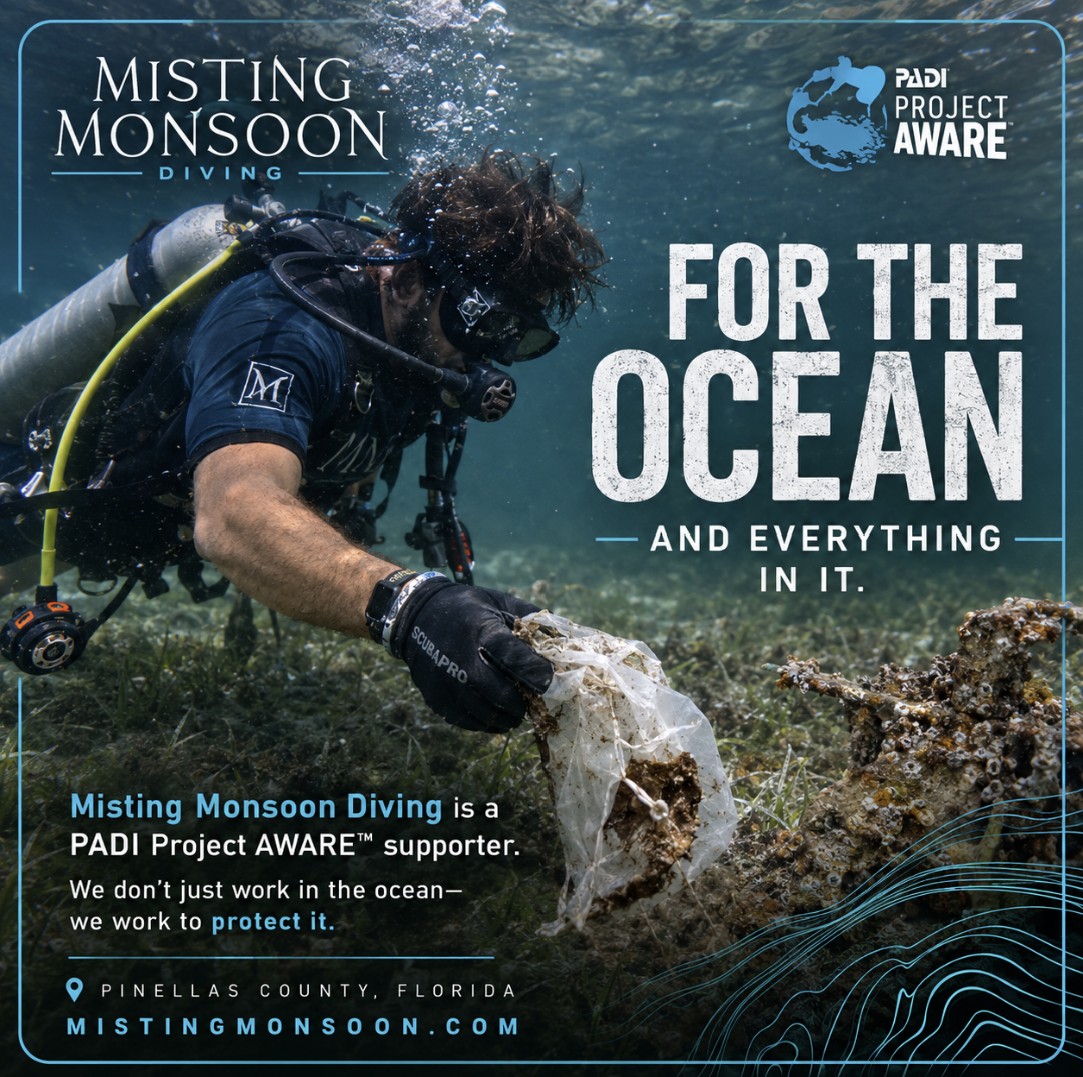
Community & Conservation
There’s a moment every working diver knows. You’re under a hull at Maximo or Salt Creek, running your hand along the bottom paint, and your light catches something that doesn’t belong there. A snarl of monofilament. A can. A bag settled into the grass like it grew there.
You surface, and the water looks beautiful. It always does. That gap — between what the surface shows and what the bottom holds — is the whole reason we joined PADI AWARE.
PADI AWARE Foundation is a nonprofit built on a simple observation: divers are already down there. Millions of people, all over the world, voluntarily spending time underwater, seeing conditions that almost nobody else sees firsthand. Organize that, and you have something no research budget could buy.
So that’s what the Foundation does. It turns everyday divers and dive businesses into what it calls Ocean Torchbearers — a global network that removes marine debris, records what it finds, advocates for stronger protections, and feeds real data to the scientists and policymakers who need it. The organization has been at this for over 30 years.
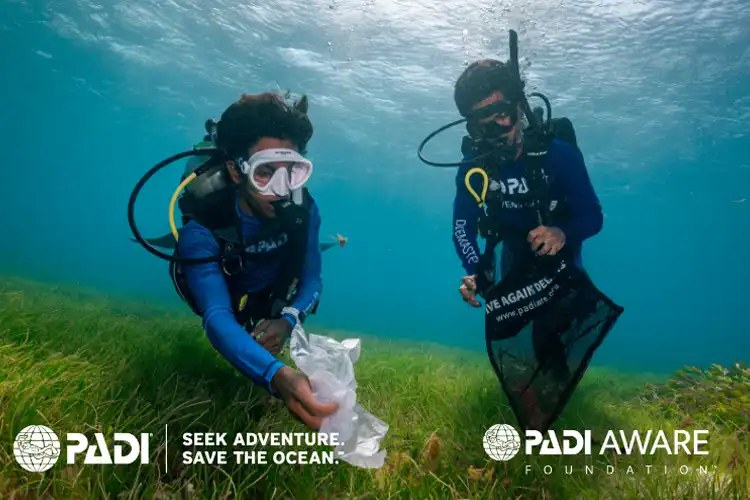
Divers working a seagrass bed on a marine debris survey — the part of a cleanup that happens after the volunteers on shore have gone home. Image courtesy of PADI AWARE Foundation.
The Foundation groups its work under a plan it calls the Blueprint for Ocean Action. Four priorities, plainly stated:
Get trash and plastic out of the ocean, and log every piece so the removal doubles as a data set. This is the pillar closest to our own work.
Grow the amount of ocean that carries real legal protection, and safeguard the biodiversity inside those boundaries for the long term.
Advocate for species under pressure. The Foundation has helped secure international protection for more than 100 shark and ray species.
Bring degraded marine habitats back and strengthen the ocean’s ability to absorb climate pressure. Seagrass, reef, and everything that depends on them.
Underneath all four sits the Conservation Action Portal — the Foundation’s platform for finding conservation activities, logging what you contribute, and rolling thousands of small local efforts into a picture big enough to act on. That last part is the piece worth sitting with. A single cleanup is a good afternoon. Ten thousand cleanups, all recorded the same way, is evidence.
Longtime divers will recognize this mark. Project AWARE is the name the organization carried for most of its history, and you’ll still see the hammerhead-and-diver logo on dive shop walls, old rash guards, and cleanup banners across Florida.
Same mission, same people, broader mandate under the PADI AWARE Foundation name. If you’ve ever picked up trash on a dive because a shop asked you to, you were already part of this.
It’s a good question, and the answer is most of the reason we’re here. We’re a Pinellas County dive operation — hulls, zincs, underwater inspections. That work puts us in the water more often than almost anyone else in the bay, and that turns out to matter.
Recreational divers get the postcard sites. We work marinas, canals, mooring fields, and private docks — the busy, working water where a coastline’s debris tends to settle. Every service dive doubles as a survey of the bottom. We see the seasonal changes, the shifts after a storm, the places where a current collects things year after year.
A clean hull moves easier. Less throttle for the same speed, better fuel numbers, and measurably less going into the air and water across a whole fleet of boats — which is why we wrote a whole piece on clean hulls and fuel savings.
There’s a second effect that gets less attention. Marine growth travels. Regular in-water cleaning keeps a hull from carrying an established colony between marinas — one of the simplest ways a single boat owner helps a whole waterway stay healthy.
That phrase belongs to PADI AWARE, and it’s the honest description of what a working diver is. We report what’s on the bottom, remove what we can carry, and make sure it gets counted.
Joining PADI AWARE didn’t change what we do. It gave the part we were already doing somewhere to go.
Our cleanup work started before any of this — and it started for an ordinary reason. Volunteer beach cleanups in Pinellas County are terrific, and they cover the sand beautifully. What settles below the waterline simply needs a diver.
That’s the half we bring. When a cleanup happens on a beach we can dive, we work underneath it.
On July 5, 2026, founder Jarrett Maryon joined the annual post-Fourth of July cleanup at Treasure Island and worked the water while volunteers worked the shoreline — recovering cans, plastic, and firework debris that had already gone under. Tampa Bay 28 covered the day, and Jarrett went on camera to explain why the part you can’t see is the part that matters. Treasure Island Adopt-A-Beach organized the shoreline half.
That day is a fair preview of how our PADI AWARE contribution will work: shoreline volunteers up top, certified divers underneath, and a record of what came out of the water.
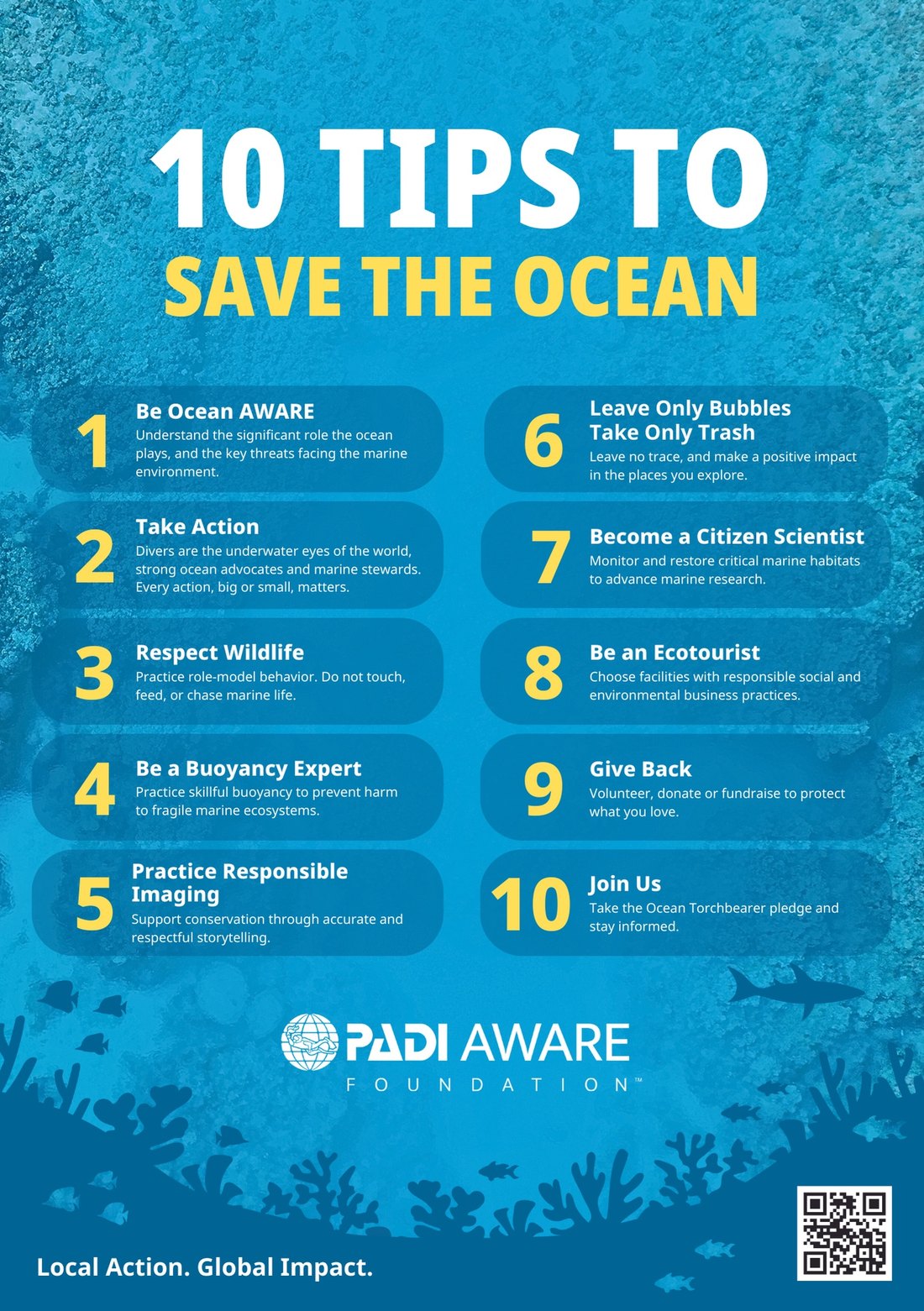
PADI AWARE publishes this list for divers, but read it again with a boat owner in mind — almost all of it applies from the deck as easily as it does from 20 feet down.
The ones we’d underline for Pinellas County: take only trash, because a single bag on the way back to the dock adds up faster than anyone expects. Respect wildlife — our waters are full of manatees, turtles, and rays that would rather be left alone. And be an ecotourist, which mostly means choosing marine services that treat the water as something more than a workplace.
The last one on their list is the easiest and the most underrated: join in. Take the pledge, show up for something local, stay informed.
Infographic courtesy of PADI AWARE Foundation.
We’d rather promise a little and deliver it than announce a campaign. So, concretely:
None of this requires a wetsuit.
Organizing a shoreline or marina cleanup in Pinellas County? Tell us the date and we’ll handle what’s underneath.
Get in touch →Cleanups, press coverage, and conservation updates as they happen — all collected on our We Care page.
See We Care →Take the Ocean Torchbearer pledge, find a conservation activity near you, or read the Foundation’s impact reports.
Visit PADI AWARE →Good maintenance and good stewardship were never separate things. We’re just glad to be doing it alongside a few million other people now.
Questions about our conservation work, or want us at your next cleanup? Call 727-344-9848 or send us a note. Misting Monsoon Diving serves boat owners across Pinellas County, Florida.
← Back to We Care