Marinas we dive · Palm Harbor
Home Port Marina, and the water it lives in.
St. Joseph SoundOzonaSeagrass water
Marinas we dive · Palm Harbor
The water
Ozona was a shipping point before it was anything else — a small Gulf-coast landing on St. Joseph Sound, the shallow clear reach between the mainland and the barrier islands.
The water here is the cleanest we work in Pinellas. Good Gulf exchange over a seagrass bottom keeps it clear enough that an inspection dive returns real information rather than a reading by feel.
The islands opposite are younger than they look. Until 1921, Honeymoon and Caladesi were a single barrier island; that year's hurricane cut them apart.
At 3.4 miles in from Hurricane Pass, the flushing has largely spent itself. What grows here is soft, and soft growth is forgiving until it isn't.
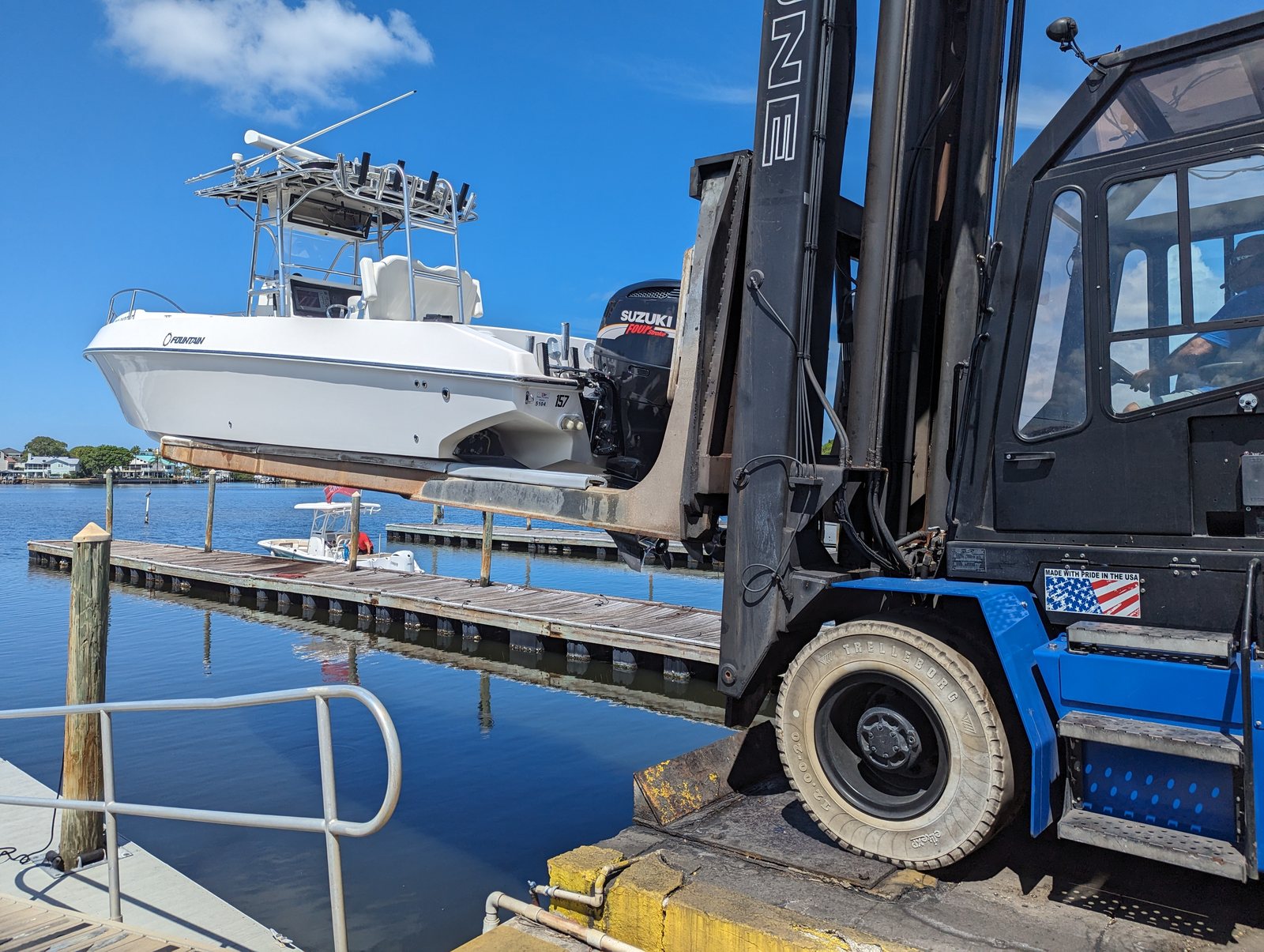
Home Port Marina, Palm HarborHome Port Marina lies about 3.4 miles from Hurricane Pass, with Dunedin Pass roughly 4.3 miles off. It sits back from the inlet, and that distance is the single best predictor of how fast a hull fouls here.
At this distance the tidal push has largely spent itself. Water warms, turnover slows, and the balance shifts toward soft growth — slime and grass rather than heavy shell.
A private marina with a settled fleet gives us the most useful thing possible: the same hulls over time, so the cadence gets sharper with every visit.
Timeline
Richard L. Garrison records the first land deed, seven years after Florida becomes a state.
George L. Jones tries to fix his own name to the settlement.
Two Scots from Edinburgh open a general store on the waterfront. It becomes the hub of the settlement.
The two merchants petition to name the post office and town after Dùn Èideann — Gaelic for Edinburgh.
With its big dock, Dunedin carries Florida's largest fleet of sailing vessels and builds the state's first wooden yachts.
The Orange Belt Railway links Dunedin to St. Petersburg.
The Tampa Bay hurricane splits one barrier island in two. The gap between the halves is named for the storm that made it — Honeymoon and Caladesi.
Honeymoon Island becomes a state park and goes on to be the most-visited in Florida.
Things worth knowing
Distance to the nearest inlet is the strongest single predictor of fouling rate. At 3.4 miles from Hurricane Pass, with Dunedin Pass a further 4.3 miles off, this berth sits at the edge of it.
Ozona, on the Sound. Palm Harbor, on St. Joseph Sound, 3.4 miles inside Hurricane Pass — well within our regular run.
Growth in Pinellas is not linear, and at 3.4 miles in the seasonal swing is pronounced but predictable. A cadence set for August will be wrong in January.
Bare metal fouls faster than painted surface everywhere on this coast, and even in slow water it leads the hull. Props, shafts and struts usually signal the timing before the paint does.
Manatees, dolphins and grass beds share St. Joseph Sound. Method matters as much as schedule — media matched to the paint, and nothing scoured into the bottom.
590 Google reviews at 4.5 stars puts this among the busier facilities we cover, and busier basins mean more hull traffic moving growth around.
From the diver
The Sound is the clearest water in the county to work in. Lighter fouling overall, and good enough visibility that an inspection dive returns real information rather than a guess by feel.
Seagrass bottom means care with what gets stirred up and where. Cleaning here is as much about not damaging the grass beds as it is about the hull.
Lighter growth invites longer intervals — but the running gear still fouls on its own schedule, and that is usually what sets the timing.
Gallery


The marina


We dive St. Joseph Sound and know how it behaves through the season. Tell us the boat and the slip and we'll send a number and a cadence that fits the water it actually sits in.