Marinas we dive · Gulfport
City of Gulfport Municipal Marina, and the water it lives in.
Waterfront since 1905Boca Ciega BayCity-owned
Marinas we dive · Gulfport
The water
The town went through four names before it settled. Settled in 1868 as Barnett's Bluff, platted in 1884 as Disston City after the Philadelphia land baron Hamilton Disston, then Bonifacio, then Veteran City — and finally, in 1910, Gulfport.
It nearly became the main event. Peter Demens ran his Orange Belt Railway down to this waterfront first; only afterward did he push the line further south and name its new terminus St. Petersburg, after his home city.
What made the waterfront matter was the electric dock. Completed in 1905, it ran 700 feet out into Boca Ciega Bay, lit and wired, with trolley track laid the full length of it. Streetcars rolled from St. Petersburg down what is now Beach Boulevard and continued out over the water, so passengers could step off the trolley and directly onto a boat bound for Pass-a-Grille. A ticket office opened at the far end in 1906. That service ran for more than twelve years before the first bridge ever reached the lower Gulf beaches.
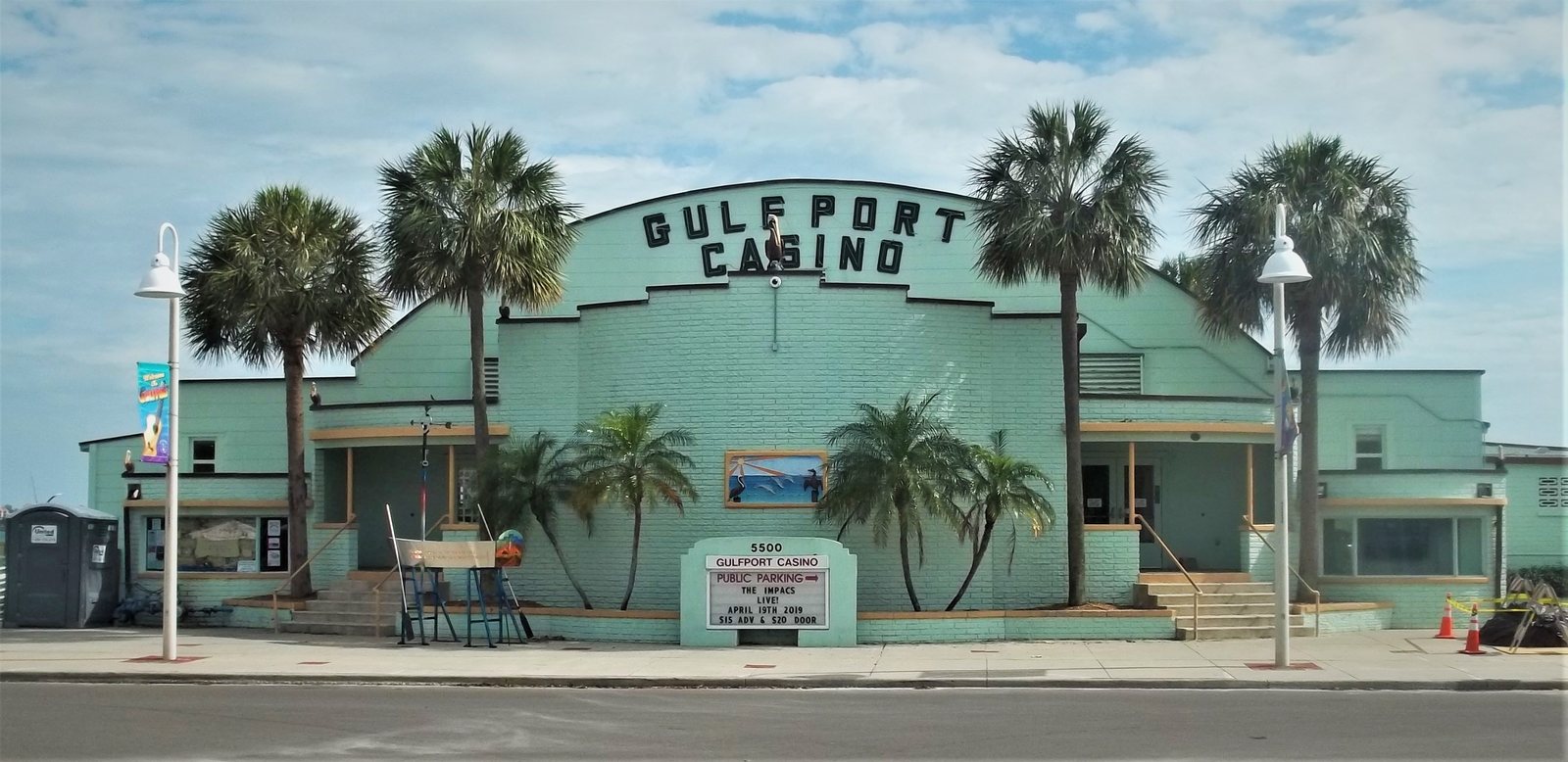
The Casino followed the same logic — a destination at the end of the line. Dances were being held on its upper floor by April 1906. The 1921 hurricane took the original building; a replacement went up on stilts over the bay in December 1924. In 1934 the city stopped fighting the water and dredged the bay bottom to make solid ground, and Frank Showerman's 10,000-square-foot wood-and-brick hall opened that December. Twelve hundred people turned out for the dedication in 1935.
At 3.6 miles in from Blind Pass, the flushing has largely spent itself. What grows here is soft, and soft growth is forgiving until it isn't.
City of Gulfport Municipal Marina, GulfportCity of Gulfport Municipal Marina lies about 3.6 miles from Blind Pass, with Pass-a-Grille Channel roughly 4.7 miles off. It sits back from the inlet, and that distance is the single best predictor of how fast a hull fouls here.
At this distance the tidal push has largely spent itself. Water warms, turnover slows, and the balance shifts toward soft growth — slime and grass rather than heavy shell.
As a city-owned facility it takes a broad mix of boats rather than one class, which means the fouling picture varies more berth to berth than at a private marina with a narrower fleet.
Timeline
James and Rebecca Barnett settle the bluff above Boca Ciega Bay.
The Orange Belt Railway reaches the waterfront. Demens later pushes south and names that terminus St. Petersburg.
A 700-foot lighted dock is built into the bay with trolley track running its full length. Streetcars connect to St. Petersburg from April 5.
A ticket office opens at the end of the dock. Dances begin on the Casino's upper floor. Passenger service runs 12 years before the first beach bridge.
After Bonifacio and Veteran City, the name finally sticks.
The original Casino is destroyed. A replacement opens on stilts over the bay in December 1924.
The city dredges the bay bottom to create terra firma and builds a seawall — ending the era of over-water structures.
Frank Showerman's 10,000-square-foot hall is dedicated before a crowd of 1,200.
Things worth knowing
Distance to the nearest inlet is the strongest single predictor of fouling rate. At 3.6 miles from Blind Pass, with Pass-a-Grille Channel a further 4.7 miles off, this berth sits at the edge of it.
City-owned, on the Gulfport waterfront. Gulfport, on Boca Ciega Bay, 3.6 miles inside Blind Pass — well within our regular run.
Growth in Pinellas is not linear, and at 3.6 miles in the seasonal swing is pronounced but predictable. A cadence set for August will be wrong in January.
Bare metal fouls faster than painted surface everywhere on this coast, and even in slow water it leads the hull. Props, shafts and struts usually signal the timing before the paint does.
Manatees, dolphins and grass beds share Boca Ciega Bay. Method matters as much as schedule — media matched to the paint, and nothing scoured into the bottom.
587 Google reviews at 4.6 stars puts this among the busier facilities we cover, and busier basins mean more hull traffic moving growth around.
From the diver
Boca Ciega runs shallow and warm, and warm shallow water grows things. Expect a real barnacle set from May through October and a heavier slime layer than you would see in open Gulf water.
Flushing is the variable that matters most. A slip near the mouth of a canal turns over far more water than one at the dead end, and two boats a hundred yards apart can foul at noticeably different rates.
Because growth here is fast rather than gradual, cadence beats intensity. Frequent light cleans hold the paint far better than waiting for a heavy set and then scrubbing hard to catch up.
Gallery


We dive Boca Ciega Bay and know how it behaves through the season. Tell us the boat and the slip and we'll send a number and a cadence that fits the water it actually sits in.