Marinas we dive · Madeira Beach
Bowden's Marina, and the water it lives in.
Beside John's PassBoca Ciega BayMadeira Beach
Marinas we dive · Madeira Beach
The water
The barrier island here was continuous until 27 September 1848, when a Category 4 hurricane cut it in two and left the inlet now called John's Pass.
A boat berthed on the bay side gets a useful contradiction: sheltered, warm, slow-moving water within sight of one of the hardest-running tidal passes on the coast.
The pass drives the exchange. The back-bay berths get the calm — and the growth that comes with it.
1.7 miles from John's Pass is close enough that the season does most of the forecasting for you. Predictable water is the easiest kind to schedule around.
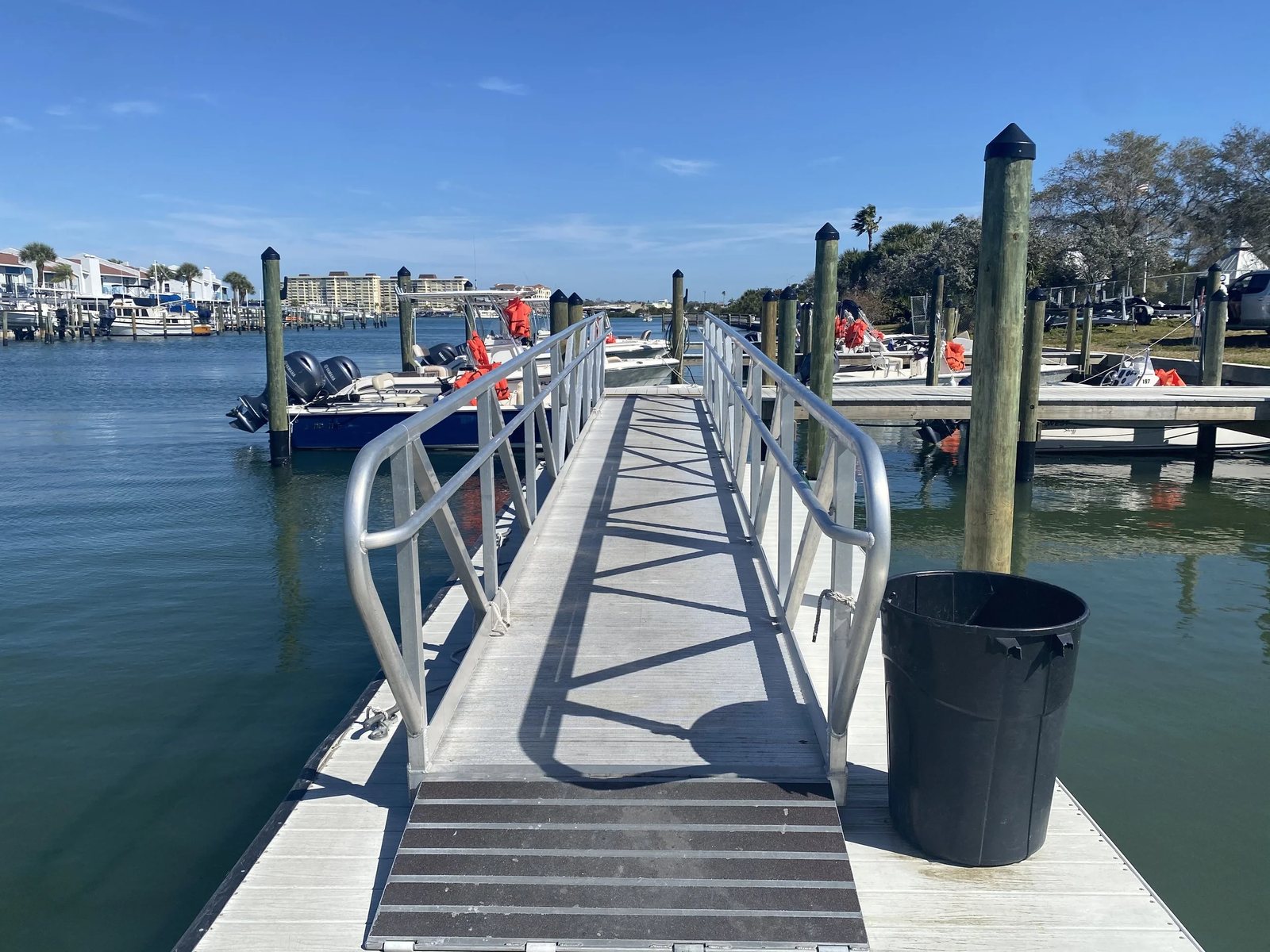
Bowden's Marina, Madeira BeachBowden's Marina lies about 1.7 miles from John's Pass, with Blind Pass roughly 5.9 miles off. It is close enough to the inlet to feel it, and that distance is the single best predictor of how fast a hull fouls here.
Close to a pass, tidal exchange still reaches the berth but has lost some of its force. Growth is mixed rather than dominated by one thing, and it follows the season more predictably than water further in.
A smaller, owner-run operation usually means a stable set of boats that stay put. Stable boats build predictable growth, which is the easiest kind to plan around.
Timeline
The army opens a rest post on Clear Water Harbor. The peninsula is barely settled.
A lighthouse goes up at the mouth of Tampa Bay. The Great Gale destroys it the same year.
A Category 4 hurricane lands at the mouth of Tampa Bay and cuts a new inlet through the barrier island.
Levique and Silva, sailing home from selling green turtles in New Orleans, find the opening and sail through.
Both men claim 160-acre federal grants on condition they settle the ground around the pass.
A two-lane drawbridge finally spans the pass.
The crossing is replaced twice more as traffic and vessel size grow.
Wilson Hubbard persuades Madeira Beach to build it. It now runs 1,100 feet.
Things worth knowing
Distance to the nearest inlet is the strongest single predictor of fouling rate. At 1.7 miles from John's Pass, with Blind Pass a further 5.9 miles off, this berth sits well within reach of it.
Madeira Beach, on the Intracoastal side. Madeira Beach, on Boca Ciega Bay, 1.7 miles inside John's Pass — well within our regular run.
Growth in Pinellas is not linear, and at 1.7 miles in the seasonal swing is pronounced but predictable. A cadence set for August will be wrong in January.
Bare metal fouls faster than painted surface everywhere on this coast, and in moving water it is relentless. Props, shafts and struts usually signal the timing before the paint does.
Manatees, dolphins and grass beds share Boca Ciega Bay. Method matters as much as schedule — media matched to the paint, and nothing scoured into the bottom.
With 3 reviews it is one of the quieter entries on our list — smaller fleets tend to mean more stable, more predictable fouling.
From the diver
Boca Ciega runs shallow and warm, and warm shallow water grows things. Expect a real barnacle set from May through October and a heavier slime layer than you would see in open Gulf water.
Flushing is the variable that matters most. A slip near the mouth of a canal turns over far more water than one at the dead end, and two boats a hundred yards apart can foul at noticeably different rates.
Because growth here is fast rather than gradual, cadence beats intensity. Frequent light cleans hold the paint far better than waiting for a heavy set and then scrubbing hard to catch up.
Gallery


The marina

We dive Boca Ciega Bay and know how it behaves through the season. Tell us the boat and the slip and we'll send a number and a cadence that fits the water it actually sits in.